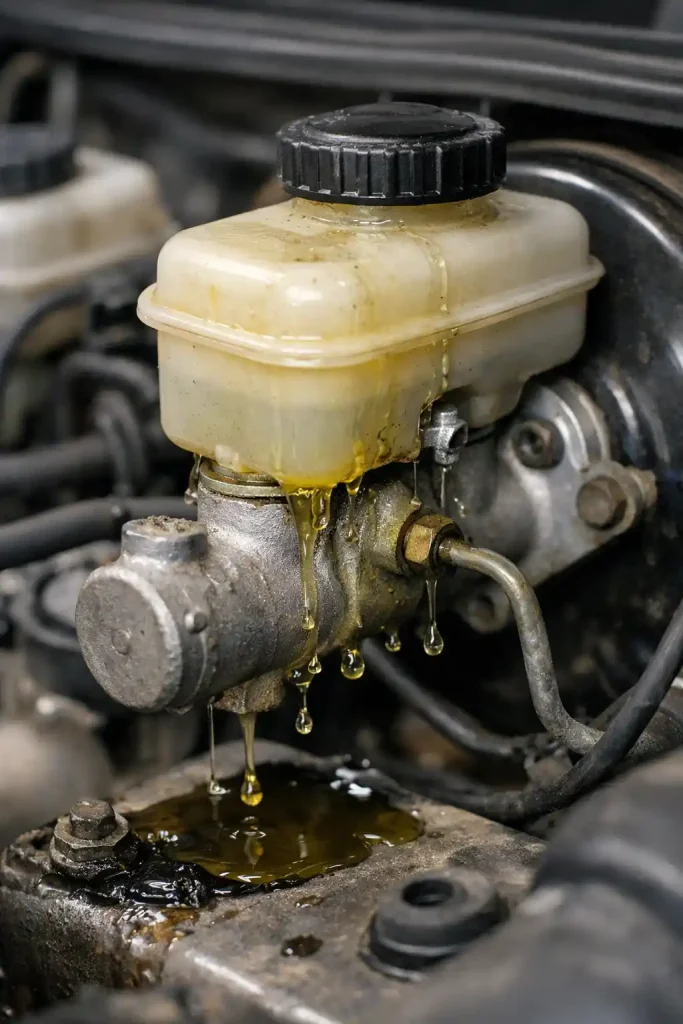
Brake Fluid Leak from Master Cylinder: Causes, Signs, and Repair Guide
April 1, 2026
Quick Answer: A brake fluid leak from the master cylinder is a serious issue that impacts your vehicle’s ability to stop safely.This hidden problem can lead to soft brake pedals, decreased stopping power, and unpredictable braking, which is especially dangerous in heavy traffic, making timely brake repair in Dubai essential for your safety. In this guide, we’ll explain what causes these leaks, how to identify them confidently, and what you can do to fix or prevent them.
What Is the Master Cylinder and Why Does It Matter
The master cylinder is the heart of your braking system. When you step on the brake pedal, this component converts your mechanical pressure into hydraulic force that pushes brake fluid through the brake lines to the calipers or drums. If the master cylinder leaks, especially at its rear seal near the brake booster, the system loses hydraulic pressure, and that means less stopping power.Brake fluid isn’t just critical for stopping; it also keeps your braking system functioning under extreme heat and pressure. Without proper fluid volume and pressure, the brakes can fail. It’s vital to know the signs of low brake fluid before it becomes a safety risk.
Common Causes of Master Cylinder Brake Fluid Leak
Worn or Damaged Internal Seals
Over time, brake fluid can become contaminated or oxidized.
Contaminants wear down rubber seals inside the master cylinder.
Worn seals allow fluid to escape past them.
Corroded Components
Corrosion inside the master cylinder or on flange surfaces can weaken sealing areas, leading to leaks.
Failed Gaskets and Reservoir Issues
A cracked reservoir cap or a bad gasket can let fluid escape.
Leaks may occur at the connection point between the reservoir and master cylinder.
External Factors
Dirt buildup, road debris, or impacts can damage brake line connections near the master cylinder.
Signs You Have a Brake Fluid Leak from the Master Cylinder
Identifying a brake fluid leak early helps prevent brake failure. Look for:
Soft, Spongy Brake Pedal: If pressing the pedal feels mushy, fluid loss may be to blame.
Brake Warning Light: A persistent dashboard brake light often indicates low brake fluid.
Fluid Around Brake Booster: Leaks often pool where the master cylinder connects to the booster.
Uneven Brake Performance: Increased stopping distance or inconsistent pedal feedback.
Repair Guide: Fixing a Master Cylinder Leak
Safety First
Always work on your car on a level surface with the engine off and the parking brake engaged.
Step‑by‑Step
Confirm Source: Clean the suspected area and check for fresh fluid while applying pedal pressure.
Remove Faulty Unit: Carefully detach brake lines and unbolt the master cylinder.
Inspect Brake Booster: If fluid leaked into the booster, it may need replacement.
Install New or Rebuilt Unit: Always bench‑bleed your new master cylinder before installation.
Bleed the Brake System: This removes trapped air and ensures firmness in pedal feel.
Test Drive Carefully: Confirm brake performance in a safe location before normal driving.
Preventing Future Leaks
Brake Fluid Change: Replace fluid based on manufacturer recommendations to prevent corrosion and seal wear.
Periodically inspect brake lines and connections.
Check for lower fluid levels and signs of low brake fluid before they become failures.
Regular brake maintenance and timely brake fluid changes also keep your system responsive and reliable. For Audi vehicles, scheduling professional Audi brake repair in Dubai helps maintain peak braking performance.
Conclusion
A brake fluid leak from the master cylinder is not just a maintenance issue; it’s a safety issue. By knowing the causes, recognizing the early signs, and acting quickly with proper repair steps, you protect yourself and others on the road and know when it’s time to replace rear brake pads and rotors for optimal safety. Regular brake maintenance and timely brake fluid changes also keep your system responsive and reliable. Don’t ignore warning signs; take action today for safer driving.
Trusted Brake Pad Replacement in Dubai
Keeping your brakes in top condition is essential for safety. Choosing professional brake pad replacement in Dubai ensures:
Expert Technicians: Skilled mechanics install your brake pads correctly.
Quality Parts: High-grade or OEM pads for longer-lasting performance.
Complete Check: Master cylinder, brake lines, and fluid are inspected.
Reliable Safety: Smooth, consistent braking you can trust.
Frequently Asked Questions
Q: Can low brake fluid affect power steering?
A: Yes, some vehicles share hydraulic systems, and low brake fluid can cause harder steering or affect power assist.
Q: Can you drive with a brake fluid leak?
A: Driving with a brake fluid leak is unsafe and can lead to brake failure, so the vehicle should be inspected immediately.
Q: How to stop a brake fluid leak?
A: Identify the source of the leak and have it repaired by a certified mechanic to restore proper braking function.